

Set up an optional team challenge
For a paper-dress activity, ask for a willing model, set a short time limit and keep materials away from faces and walkways. Let guests design, build, photograph with permission or watch. Agree simple judging categories such as creativity and teamwork before starting.
Game options to consider
Wedding Emoji Pictionary
Guess the wedding phrase shown by the emoji. Collect answers before revealing so an early guess does not spoil the puzzle.
▶ Play it free →Bridal Charades
Use the prompts for a timed acting round. Guests can volunteer to act, guess or keep score; nobody has to perform.
▶ Play it free →“Drink If…”
Read a prompt and let guests decide whether it applies. A non-alcoholic drink or a show of hands can replace sipping, and any prompt can be skipped.
▶ Play it free →Spicy Truth or Dare
A bride-edition twist on the classic — optional questions and performance prompts; preview the cards and allow passing.
▶ Play it free →Toilet Paper Wedding Dress
Give willing teams paper supplies and a short building period. Agree on judging categories first and ask permission before taking photos.
▶ Play it free →He Said / She Said
The browser game uses fictional sample answers. For a round about your own couple, collect their answers separately and keep your own score.
▶ Play it free →Purse Raid
Read the items while guests check their own bags or pockets. Agree on scoring first and do not ask anyone to display private belongings.
▶ Play it free →Bridal Shower Mad Libs
Collect the requested words before revealing the story, then invite a volunteer to read the result aloud.
▶ Play it free →Choose a silly idea with an easy explanation
A silly game works best when the task is easy to understand and the unexpected result comes from the activity itself. Guests can build an oversized paper bow, act out a difficult suitcase or supply unrelated words for a story. The host does not need to make somebody’s appearance, relationship or private life the joke. Start with an action people can picture, then give them a comfortable way to participate. A complicated set of penalties rarely makes a simple creative task more enjoyable.
Choose one physical activity and one quieter backup rather than filling the schedule with several messy or energetic games. The group may enjoy the first build or acting round and prefer to sit afterward. A word story gives another kind of participation without needing a second set of props. Ask the guest of honor what they want and check the room’s space before choosing. A game that depends on movement needs an actual clear area, not merely enthusiasm in the planning chat.
Keep the word “silly” attached to the task, not the person. “Make the paper train as dramatic as you can” invites a creative choice. “Let us see who looks ridiculous” makes the participant the target. That difference matters when guests are deciding whether to volunteer. An activity can be lighthearted and still have clear rules, voluntary roles and a host who moves on when a joke does not land.
Build a simple prop kit
List exactly what the chosen activity needs. A paper-dress challenge needs equal paper supplies, any allowed tape, a timer, a judging plan and a place for scraps. Charades needs a private prompt display and a person recording guesses, but it does not require a costume box. A story game needs words and a reader. Do not buy miscellaneous props first and then force them into the schedule because they are already on the table.
Test materials in the actual space. Paper that tears easily may change how teams build, and a table covered with food leaves little room for a craft. Put unused supplies in a container so the floor stays clear. If you offer tape or other extras, give teams the same allowance and explain it. The browser cannot enforce physical material rules, so the host needs a consistent answer when somebody asks for another roll or wants to use a guest’s scarf as part of a design.
Keep a quiet alternative available without presenting it as a consolation activity. A seated guest can supply a story word, guess a charade or help name a paper creation. Somebody who prefers watching does not need an assigned job. The alternative should be a real choice rather than a way to keep every person visibly occupied. Some guests enjoy a creative activity most when they can observe without being called on unexpectedly.
Run a paper-dress challenge with clear roles
Ask each team to choose a willing model and decide how the others will help. One person can shape the main design, another prepare strips or folds, and another check that the model is comfortable. Keep paper away from faces and necks, and let the model request changes or stop at any point. A stationary presentation is enough if walking would be awkward. Do not make the score depend on a runway performance that was not part of the original agreement.
The browser Toilet Paper Wedding Dress game starts with a ten-minute timer that the host can adjust. Its judging screen totals three human-entered scores: creativity, elegance and structure. If you want to reward teamwork as a separate house category, keep that tally outside the browser and explain it beforehand. Do not tell guests that the app automatically judges a photograph or recognizes which outfit stayed together. It records the numbers the host enters.
A useful creative brief is “a wedding outfit for a windy garden ceremony.” Teams can interpret that with folds, a short train or a large decorative feature, but the host should not add hidden points for one preferred solution. Let each team explain one design decision before judging. The explanation can be brief. The activity does not need a detailed fashion story or comments about the model’s body to create an entertaining reveal.
Try an accessory-only paper variation
If a full outfit needs too much space, ask teams to create one paper accessory off the body: a bouquet-like arrangement, an oversized bow or a decorative sash that a volunteer may choose to hold. This is a host-created variation, not a separate browser mode. Set the time and material allowance yourself, then decide whether to use the existing timer only or keep a manual judging sheet. Explain what the judge is looking for before construction starts.
An accessory challenge can make the result easier to display on a table. Guests can compare shapes without requiring somebody to wear the object. It also gives teams a manageable target when the schedule is short. Do not assume it will take a particular number of minutes for every group; allow for explanation and showing the results. If the point is cooperative creativity, you can skip scoring and invite each team to give its creation a name.
Choose a practical finish. Ask teams to stop adding materials, show the object and explain how it fits the prompt. Take photographs only if the people in the frame agree. Then gather scraps before starting another activity. Leaving cleanup until later can turn the next game’s movement into an obstacle course. The prop variation is complete when the result has been enjoyed and the space is ready for guests again.

Use charades for a short physical joke
Bridal Charades gives an actor a wedding prompt to communicate without speaking under the host’s rules. The browser turn lasts sixty seconds once the prompt is shown. Correct guesses are marked by a person; the software does not recognize the gesture or listen to the team. Keep the prompt screen private from guessers and decide whether sounds, pointing or props are allowed. A clear boundary lets the actor focus on the idea rather than trying to infer rules from the host’s reactions.
Wedding actions can be recognizable without elaborate knowledge. A proposal, cutting a cake or packing for a honeymoon gives the actor something physical to show. Do not require a guest to act out a private incident involving the couple unless they have approved it. For custom personal prompts, prepare separate slips and a manual process; the browser deck does not have a custom-prompt editor. Label that as your own variation rather than implying the app contains those memories.
Give teams equal turns if you are scoring. A loud team should not receive extra attempts because it keeps requesting one more prompt. If the room prefers a cooperative round, everybody can guess together and the host can omit the competition. Let actors pass a prompt or choose a guessing role instead. A funny attempt is welcome, but a guest who does not want to perform should not become the subject of the next joke.
Make a slow-motion host variation
For a separate paper charades round, you can ask volunteers to act a simple wedding action in slow motion. The exaggerated pace can create a different visual result without needing a personal dare. Tell guessers whether they may call out immediately or must wait until the actor finishes a short demonstration. This rule belongs to your host version. The browser does not automatically slow its timer or evaluate whether the performance was slow enough.
Keep the actions easy to perform safely in the available space. Looking for a missing ring or trying to close an overfilled suitcase can be acted without running, climbing or handling fragile objects. A seated actor can use upper-body gestures if they want. Do not require people to copy a movement that is uncomfortable. The humor comes from the imagined situation and the interpretation, not from pushing somebody beyond what they agreed to do.
If you score, use the same simple rule for each turn: one point for an accepted guess within the announced time. Decide what equivalent answers count. “Packing a suitcase” can identify an intended “packing for the honeymoon” prompt if your rule accepts the main action. The host should not demand exact wording from one team while accepting a broad guess from another. Consistency leaves attention on the performance rather than on disputed points.
Let a word story create the surprise
Bridal Shower Mad Libs asks for ten word fields before revealing a story. The browser chooses from three templates, so the wording can repeat across rounds, but the supplied words change the result. Ask guests for the requested parts of speech without showing the hidden story first. If they know the sentence structure, they may choose words designed to fit neatly, which changes the kind of surprise the activity creates.
Offer plain examples when needed. An adjective describes something; a verb is an action; a plural noun names more than one thing. A guest can say “sparkly,” “dance” or “sandwiches” without needing a grammar lesson. The host can help a word fit the requested form while preserving the guest’s choice. Avoid making somebody’s uncertainty about a term the funny part. The unusual combination of everybody’s contributions will provide the story’s own contrast.
Invite a willing reader after the story appears. They can use a normal voice or a theatrical style if they enjoy it. There is no score and no requirement to produce a dramatic performance. Copy a line manually if the group wants to keep it before choosing New story, because the browser does not offer a saved-story collection or designed PDF export. A third replay is optional; three templates do not mean the group must use all three at one event.
Prepare a tiny original story round on paper
A host can write a short story with six clearly labeled blanks and keep it separate from the guest word sheet. Ask for an adjective, an object, a place, an animal, an action and a plural noun. Then place the words into your own harmless fictional scene. This is a DIY activity you prepare, not an additional built-in browser template. Test the grammar once so the result is readable even when the words are unexpected.
For example, your fictional scene might involve an imaginary guest arriving at an imaginary ceremony with an unusual object. Keep it plainly invented rather than using the real couple’s private history. The supplied words can make the scene absurd without implying that a guest actually behaved that way. Ask contributors to keep their words within the tone agreed for the group. If an unsuitable word appears, replace it before reading rather than using it to surprise or embarrass the couple.
A paper version can work at tables where each group creates a different result. There is no correct answer, so voting is optional. If you ask for a favorite line, let the authors volunteer it rather than reading every sheet without permission. The host can recognize a creative combination without ranking the writers’ personalities. Keep the sheets separate from any personal advice cards so fictional jokes are not mistaken for sincere messages intended for the couple.
Use an item game without searching people’s belongings
Purse Raid reads a fixed list of items and lets the host award displayed points to each qualifying player. Guests choose whether to show an item from their bag or pocket. They do not need to empty their belongings or let another person inspect them. A common item appearing in an unexpected bag can be a light moment, but the host should not press for a private explanation of a receipt, photograph or message.
The normal browser format allows every qualifying player to score once per item. It is not automatically a first-person-only race. If the host wants a speed rule, announce that separate variation before play. Teams can pool belongings if team names were entered and everyone agrees. Keep the action seated if space is tight, and allow guests without bags to participate through pockets or a team if they want. Do not frame them as unprepared for attending a shower.
For a host-created “most unexpected harmless item” round, invite volunteers to show one item they choose and explain it briefly. Keep judging outside the browser because that is not the fixed deck’s scoring method. A guest can decline, and nothing private needs to be displayed. The activity should be about a chosen object, not a competition to reveal the most personal content on a phone.
Keep choice-based games light
Wedding Emoji Pictionary offers a quieter kind of silliness through interpretations of visual clues. The game uses four choices and a fixed key, with one score on the device. If a guest volunteers a different interpretation, the host can enjoy it without pretending that every plausible interpretation earns the browser point. Teams need a separate tally. The clue order is shuffled, not a designed progression from easy to hard, so avoid announcing that guests are failing the beginner section.
He Said / She Said must be introduced as a fictional sample-couple game when using the browser key. Do not make the room debate whether the actual bride or groom deserves a predefined answer. For a personal who-would-do-it round, collect the couple’s approved key separately and score it yourself. Fictional answers can be playful when clearly labeled; they become misleading when the host presents them as knowledge about real people.
Would She Rather can involve the group predicting the bride’s live choice. The host confirms whether the majority matched after she taps. The browser does not collect individual votes automatically. Keep the questions within the displayed deck or prepare a separate manual round for custom choices. A surprising preference can make a pleasant reveal without the host insisting she must justify it to everybody who guessed differently.
Use Truth or Dare only with a real pass option
Preview the cards and ask whether the tone fits the gathering. Some prompts involve a short performance, a photograph or contacting somebody, so do not assume every action is appropriate for every group. A participant can choose to pass through the next-player flow without a penalty. If another person would be involved in the action, their comfort matters too. The host should not turn a spontaneous party card into authorization to send a message or publish an image on someone’s behalf.
Introduce the activity with a clear choice: “Choose a card if you want one; you can pass or stop at any point.” Avoid a house rule that punishes passing with more dares. That undermines the invitation and can make the group less willing to join. If the room enjoys the prompts, continue. If the mood is uncertain, switch to a neutral story or puzzle rather than trying to raise the stakes until people react.
The browser cycles its truth and dare decks; it does not manage a personal roster or judge completion. The host handles turns, and the group does not need a winner. Keep the activity short enough that nobody waits through a long queue for an unwanted performance. A few voluntary cards can be enough. More cards do not automatically produce a better experience.
Choose a combination that fits your space
For a small room, pair a shared Mad Libs story with a few seated charades turns or an emoji puzzle. Keep one device visible and avoid a craft that spreads across the food table. For a larger room with willing participants, a paper build can be the central activity, followed by conversation while materials are cleared. Do not run another movement game immediately over the scraps. For a remote event, use a shared screen or host-prepared prompts that do not require guests to search private rooms.
A sample short sequence is an introduction, one creative round, a brief display or reveal and a clear return to food or conversation. Include time for instructions and cleanup. A ten-minute build does not mean a ten-minute complete activity. If the schedule is tight, choose a smaller task rather than rushing the participants through a result they spent time making. The finish should feel intentional, not like the host suddenly remembers another commitment.
Respond when the room is quieter than expected
A quiet response does not mean the activity failed. Guests may be concentrating, unfamiliar with one another or simply enjoying the moment without a loud reaction. Give a concrete next step instead of demanding more energy. “Who would like to supply the next word?” is more useful than “Come on, this is supposed to be funny.” A guest should not have to perform enthusiasm to reassure the host.
If the format truly is not working, stop it politely. “We will leave it there and return to chatting” is a complete transition. Do not blame the group or identify someone who declined as the reason. The host can learn from the choice without turning that reflection into part of the party. A flexible plan includes permission to change direction before the activity becomes uncomfortable.
End with a tidy and respectful finish
Recognize the result under the rules you announced, whether that is a team score, a completed story or a shared creation. Thank people who volunteered and those who helped. Ask before photographs and keep personal content within the permissions given. Then clear materials and return the space to its next purpose. Silly activities work best when the freedom to play sits inside a host’s dependable structure: simple instructions, honest features, voluntary roles and an easy way to finish.
Optional paid printable packs
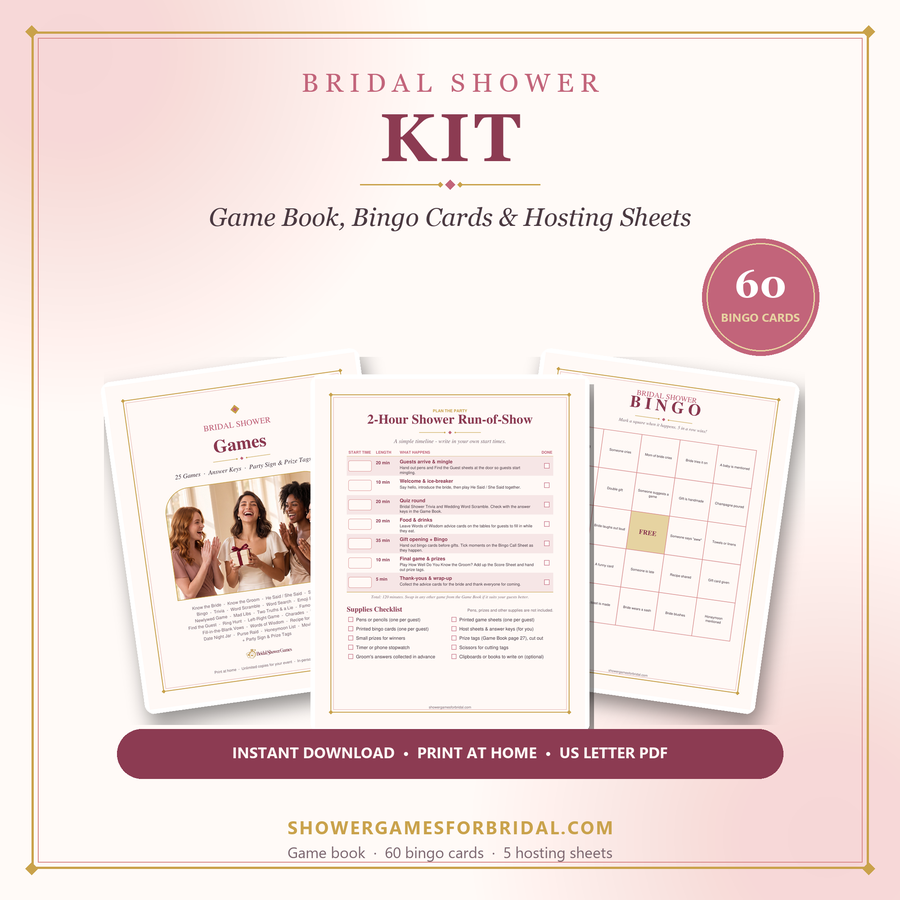
If you prefer designed paper activities, compare the paid packs below. Check each product page for its exact contents; not every browser activity has a matching printable.
For deeper planning help, see the guides on the main site: virtual & Zoom showers, funny games that aren't cheesy, games for large groups and co-ed & couples showers.